Category:
Product Design
Client:
United Nations
Duration:
6 weeks
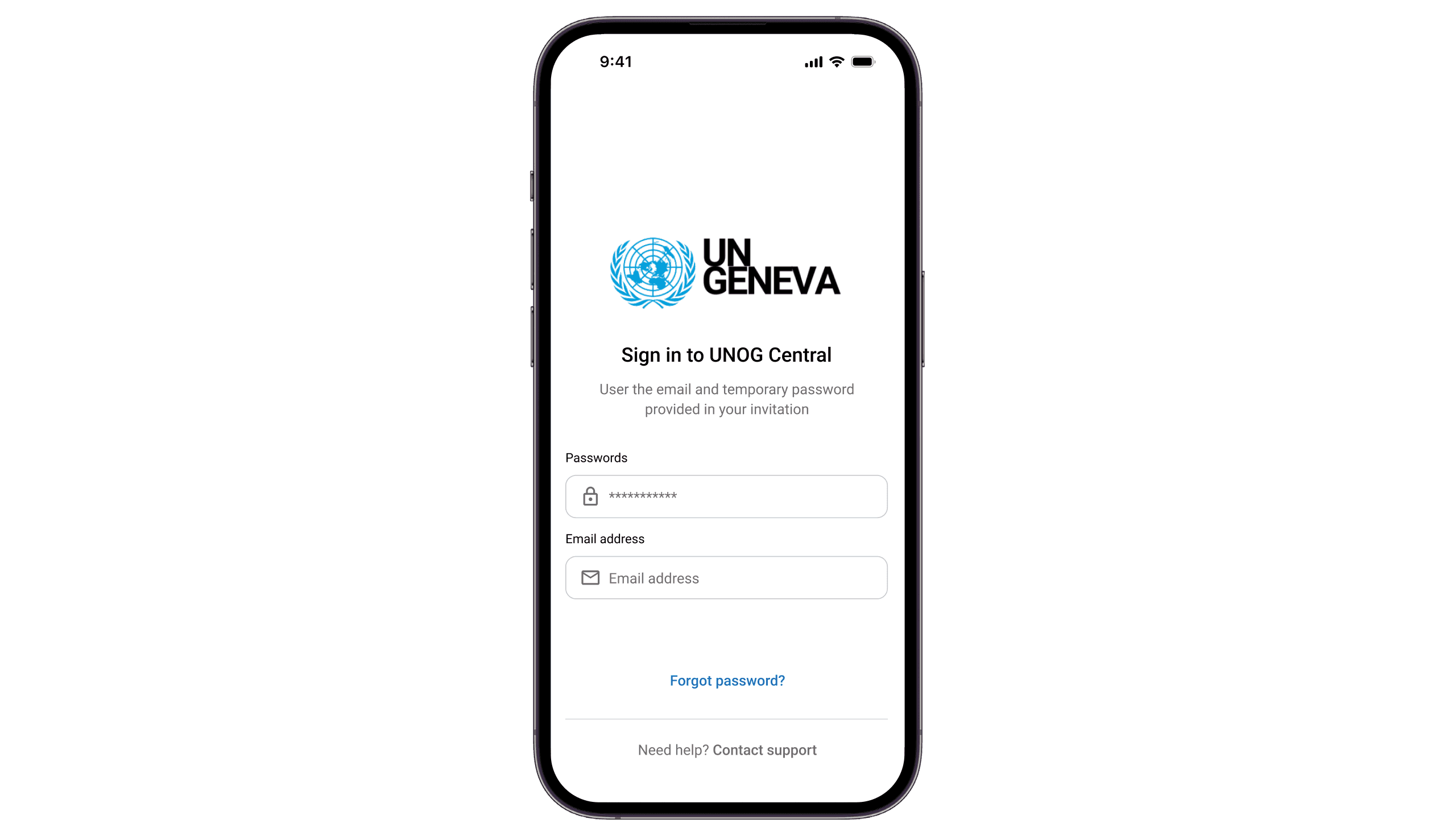
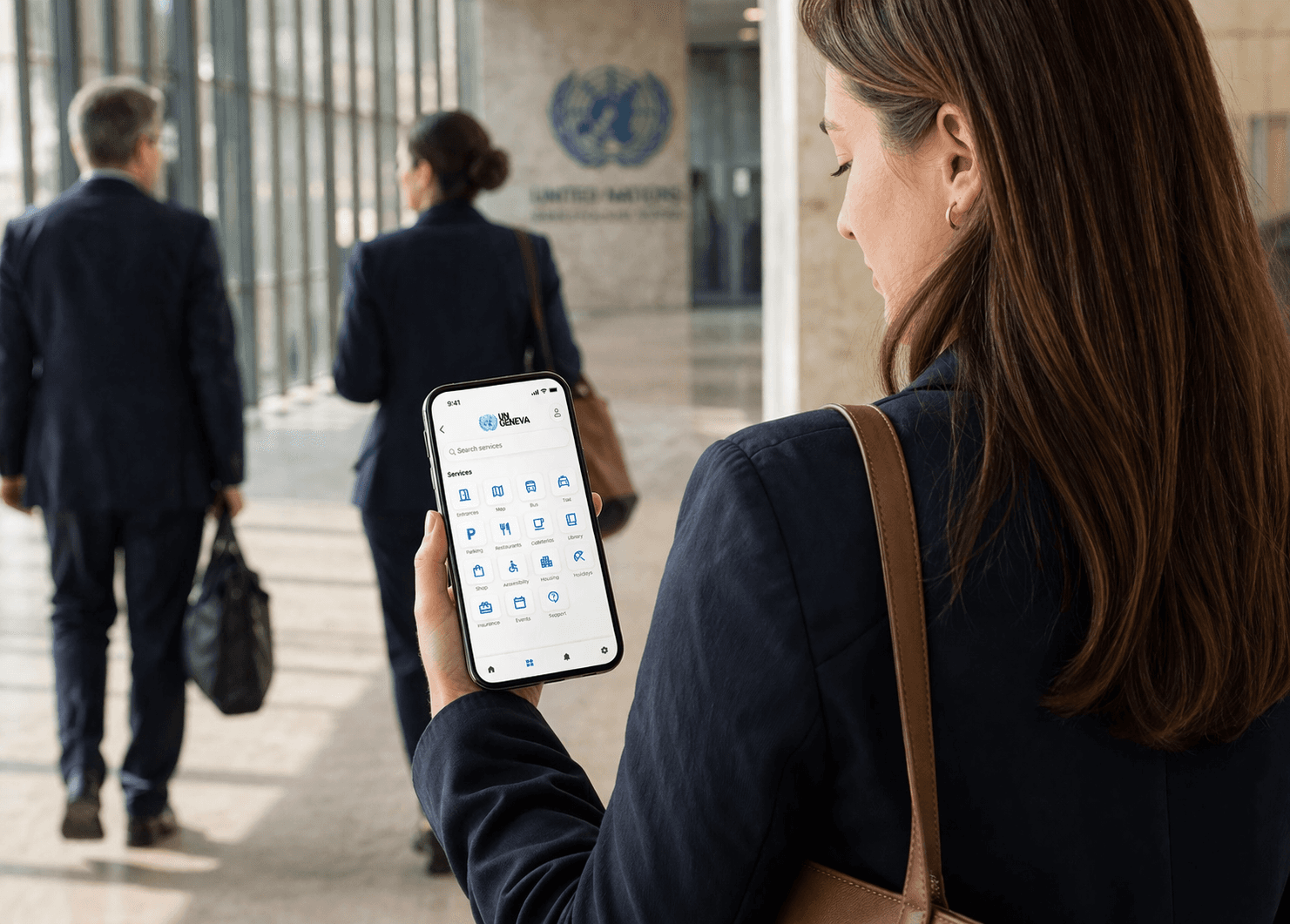
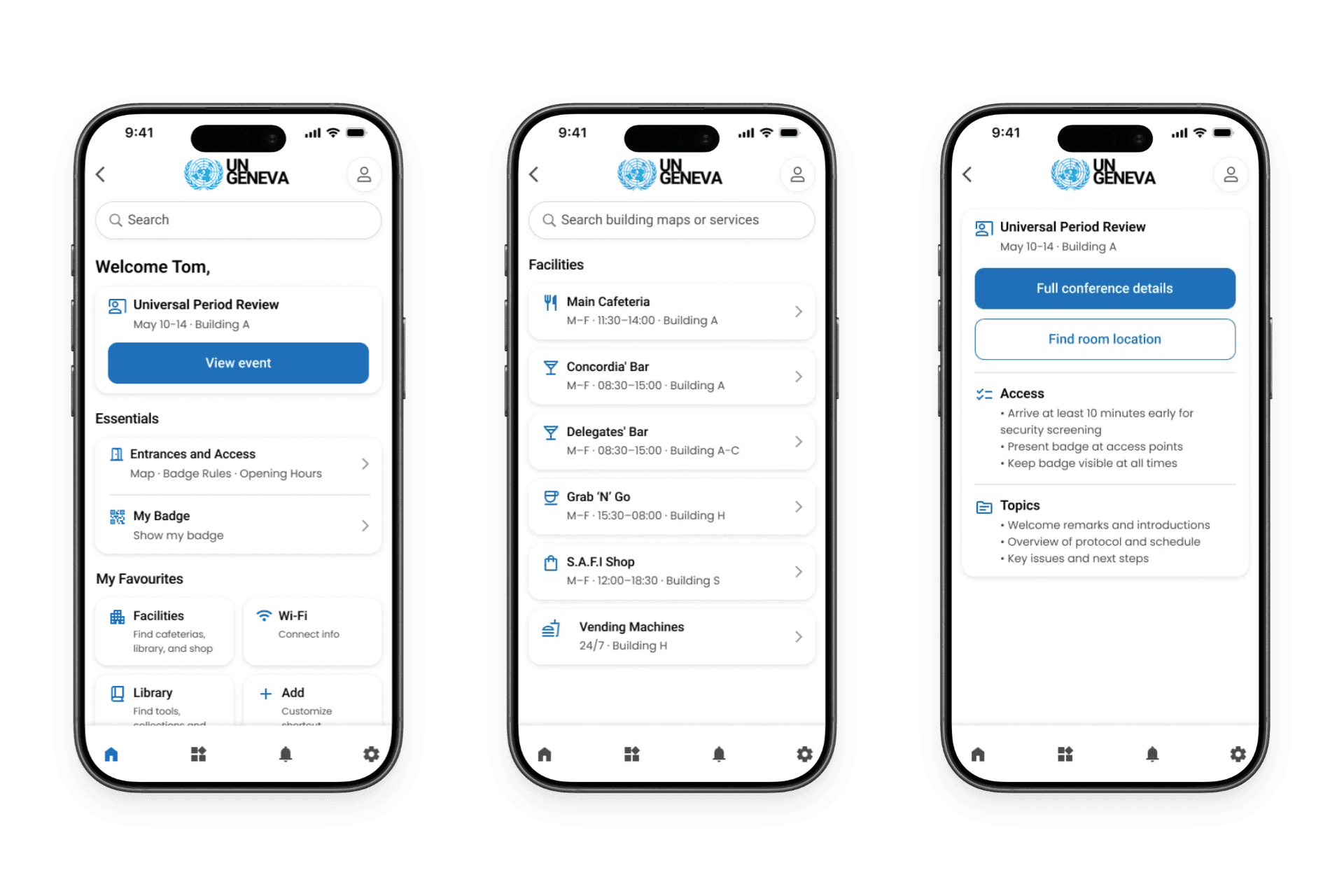
UNOG Central is an internal mobile access-layer app designed for key user groups at the United Nations Office at Geneva, including staff, delegates, new joiners, contractors, and short-term attendees. The project focused on simplifying access to verified resources, onboarding essentials, badge and access guidance, security alerts, and practical navigation support through stakeholder research, personas, user journeys, information architecture, and low- to high-fidelity product definition.
(APPROACAH)
The project began with stakeholder interviews across multiple UN departments to uncover pain points, operational needs, and gaps across the existing ecosystem. Based on these insights, key user profiles were defined, core journeys were mapped, and the information architecture was structured to support a clearer, role-based mobile experience. These foundations were then translated into low- and high-fidelity design outputs to support alignment, scope definition, and future development.
(VISION & INNOVATION)
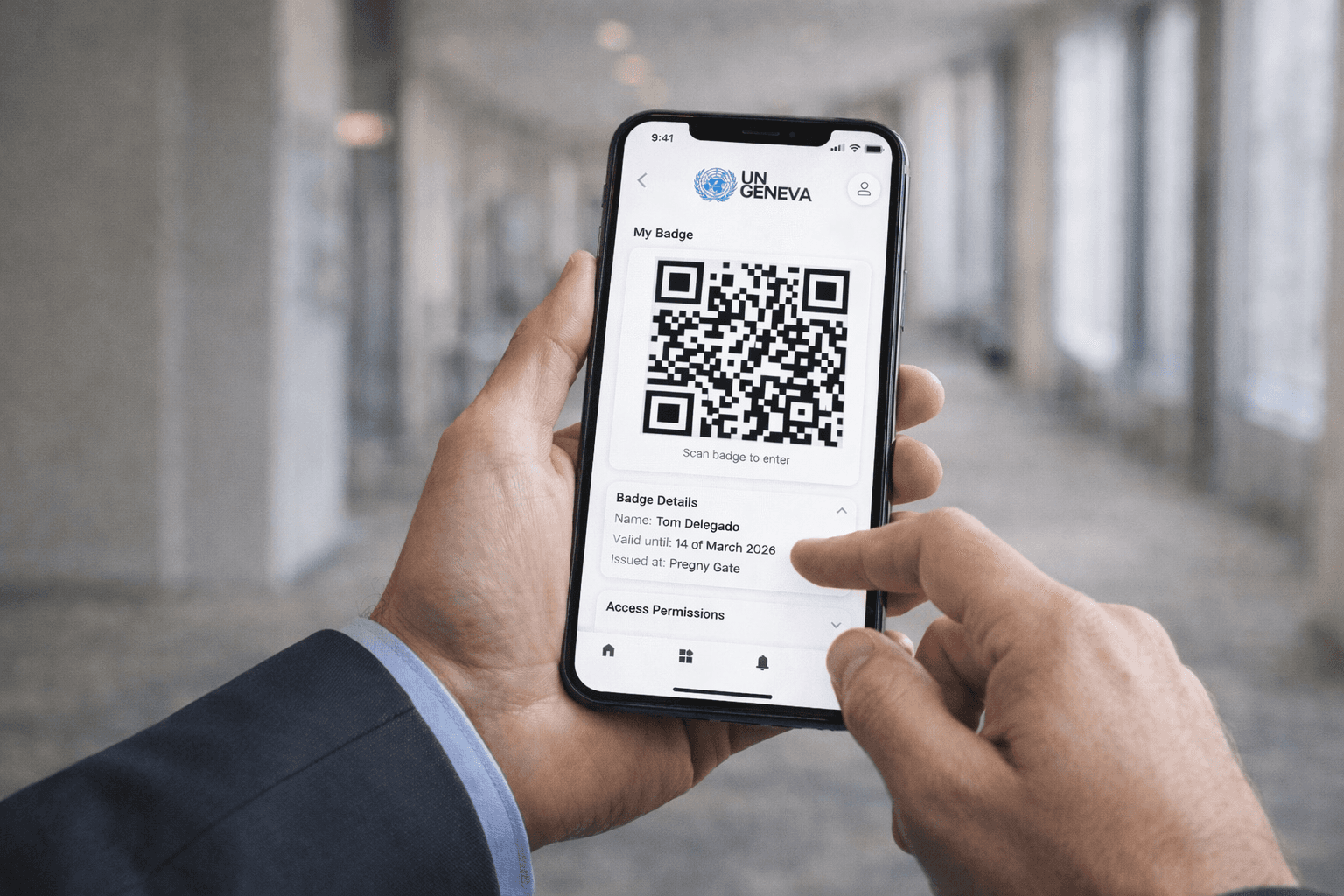
The vision was to create a unified mobile entry point that gives different UNOG user groups clearer access to essential tools, trusted resources, onboarding information, security alerts, badge and campus access information, and practical guidance for navigating gates, meeting rooms, and buildings more easily. Rather than replacing existing systems, the product was designed to bring more structure, clarity, and consistency to a fragmented internal ecosystem.
(CHALLENGES)
The challenge was to define a clear and reliable mobile experience within a complex internal ecosystem serving multiple user groups with different goals, contexts, and access needs. Information was spread across multiple systems, access and badge-related guidance could be unclear, onboarding was fragmented, and users often lacked one trusted place for practical information, alerts, and navigation support. At the same time, the solution had to work as an access layer rather than a replacement for existing systems, making scope definition and stakeholder alignment essential.
(PROBLEMS)
Access to essential tools, resources, onboarding information, alerts, and practical access guidance was fragmented across multiple internal systems. Different UNOG user groups had different needs and levels of familiarity with the organization, but there was no single structured entry point tailored to them. As a result, verified information, badge and entrance guidance, security alerts, and navigation support were harder to find, understand, and trust.
(USER-CENTRIC DESIGN)
The product direction was shaped around the real needs of distinct user groups rather than a one-size-fits-all structure. Personas and user journeys were used to define how staff, delegates, new joiners, contractors, and short-term attendees would access the right information in the right context. This user-centered approach helped create a more intuitive, role-based experience focused on clarity, relevance, and ease of access.
(USER NEEDS)
Users needed a simpler and more reliable way to access verified resources, onboarding essentials, badge and campus access guidance, security alerts, and basic navigation support. They also needed information to feel relevant to their role, context, and stage of interaction with UNOG, whether arriving as a delegate, starting as a new joiner, accessing a worksite as a contractor, or searching for the right internal tool as a staff member.